
16 October 2026 · 3 min read
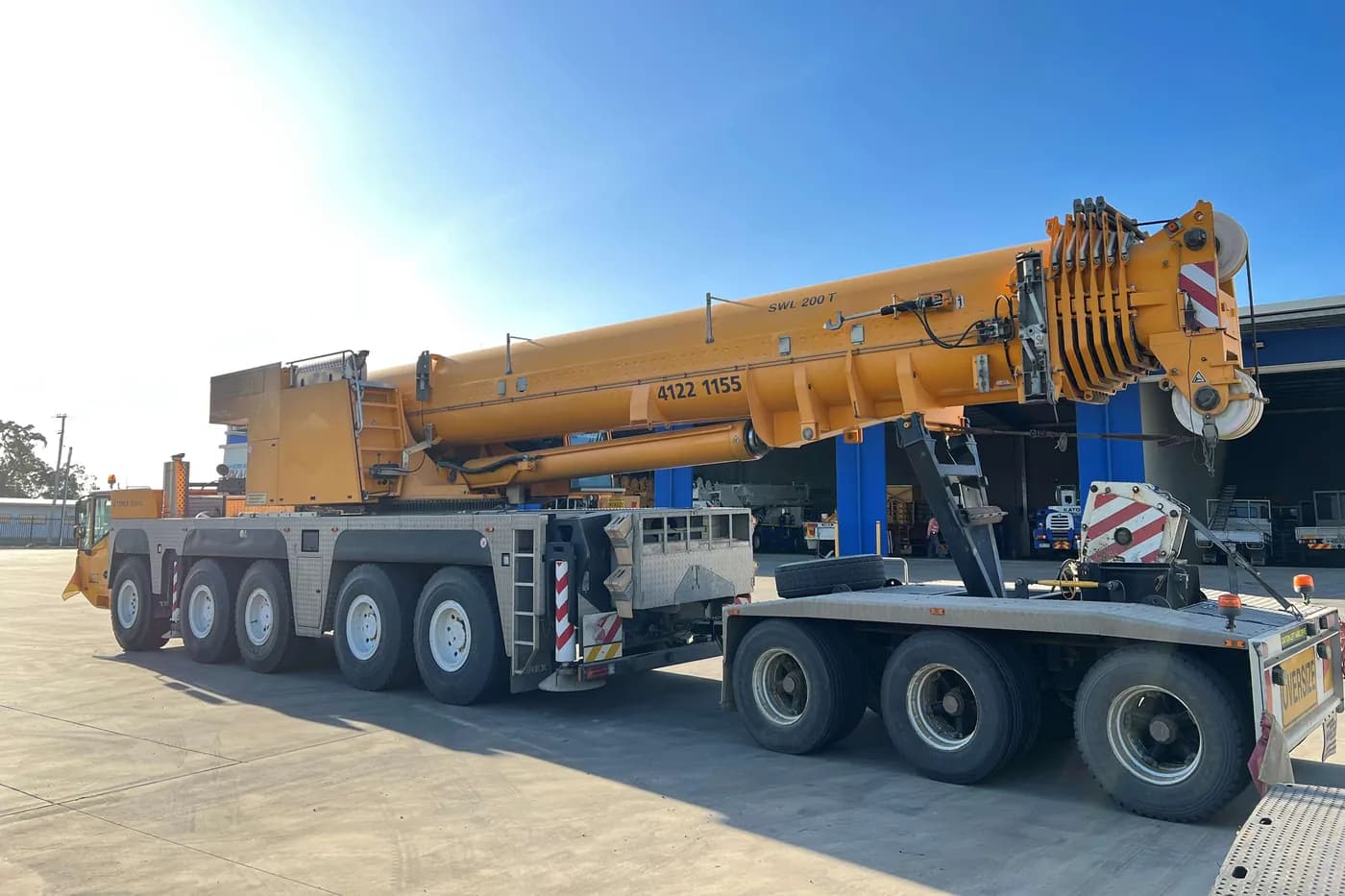
An all terrain crane is a mobile crane built to do two jobs well: travel between sites on public roads, and lift on ground that is not always flat or sealed. It is the most versatile type of mobile crane, which is why it makes up so much of the hire fleet on Australian construction, civil and industrial jobs.
This guide covers how all terrain cranes work, how they compare with other crane types, the work they suit, and what to check if you are buying a used one.
How an all terrain crane works
An all terrain crane has a multi-axle carrier with road-going suspension, so it can travel at road speed under its own power. Once on site, all-wheel drive and multiple steering modes, including crab steering, let it position itself on rougher ground and in tighter spaces than a conventional road crane.
The superstructure carries a telescopic boom, the operator’s cab and the counterweight. Before lifting, the crane sets up on outriggers to create a stable base, and counterweight is added to suit the lift. Many machines also take a fly jib or boom extension for extra height and reach.
- Carrier: the multi-axle chassis and driving cab, built for road travel.
- Superstructure: the slewing upper with the crane cab, boom and counterweight.
- Telescopic boom: extends hydraulically, with optional jibs for extra reach.
- Outriggers: extend and lower to spread the load and level the crane.
How much can an all terrain crane lift?
All terrain cranes cover a very wide capacity range. Smaller two- and three-axle machines handle everyday construction lifts, while large multi-axle units are rated in the hundreds of tonnes and take on heavy industrial and infrastructure work.
The headline capacity is only the starting point. What a crane can actually lift depends on the radius, boom length, counterweight and outrigger set-up for that lift, all set out in the manufacturer’s load chart. Buy the capacity you need at the radius you work at, not just the number on the side of the crane.
All terrain vs rough terrain vs truck cranes
These three mobile cranes are often compared. The main difference is how they balance road travel against off-road ability.
| All terrain | Rough terrain | Truck crane | |
|---|---|---|---|
| Road travel | Drives at road speed | Usually floated | Drives at road speed |
| Off-road ability | Good | Excellent | Limited |
| Typical use | Many short jobs across sites | Long stays on rough sites | Quick lifts on sealed ground |
| Complexity and running cost | Higher | Lower | Lower |
Where all terrain cranes work best
Because they drive to site and set up quickly, all terrain cranes suit work where the crane is needed for hours or days rather than months, and where it moves between jobs often.
- General building and commercial construction.
- Civil and infrastructure works, including bridge and road projects.
- Industrial maintenance and shutdowns.
- Plant and equipment installation.
- Crane hire fleets running a mix of jobs each week.
Buying a used all terrain crane: what to check
A used all terrain crane can save a large share of the cost of a new machine, but there is more to inspect than on a simpler crane. Before you buy, check:
- Hours on both the carrier and the crane, and how they compare with kilometres travelled.
- Service and maintenance history, including major component work.
- Boom condition: wear pads, telescoping cylinders, welds and any signs of repair.
- Axles, suspension, steering and tyres, since an all terrain crane has more of them than most.
- Outriggers, slew ring and hydraulics for leaks, wear and smooth operation.
- Load moment indicator and safety systems, and that the load charts are present and match the configuration.
- Registration, compliance and inspection documentation for the state the crane will work in.
- Which counterweight, jibs and accessories are included in the sale.
Buying, selling or hiring with All Cranes
All Cranes specialises in used cranes and has been buying and selling across Australia since 1995. We regularly stock all terrain cranes from manufacturers such as Liebherr, Grove, Demag and Tadano, and because we are brand independent we can source other makes through our network when the right unit is not in stock.
Each crane we list comes with detailed specifications, service history where available and clear photos. If you have an all terrain crane to sell, we can also consign it and market it to buyers across Australia.